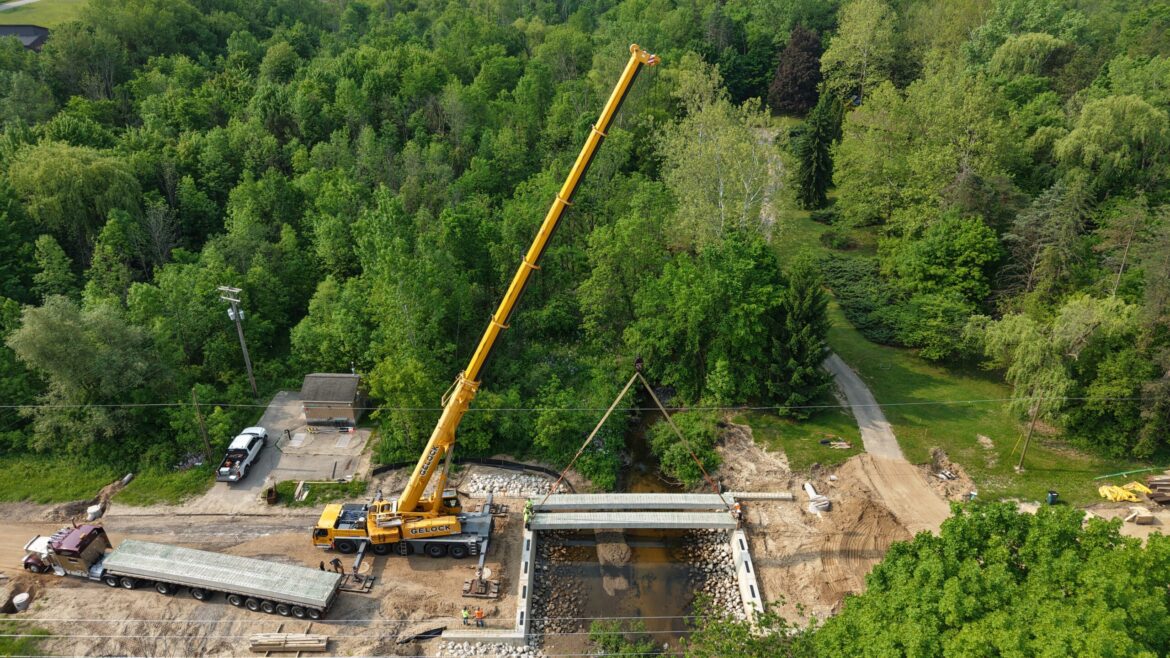
When you’re driving across Michigan, you probably don’t think twice about what’s supporting the road beneath your tires—but at Gelock, that’s exactly what we’re focused on. Bridge work is a cornerstone of our heavy-lift operations, and whether we’re working on a massive state highway or a local county road, the goal is the same: rock-solid infrastructure.
Here’s a look at two different ways we’ve been keeping Michigan moving lately.
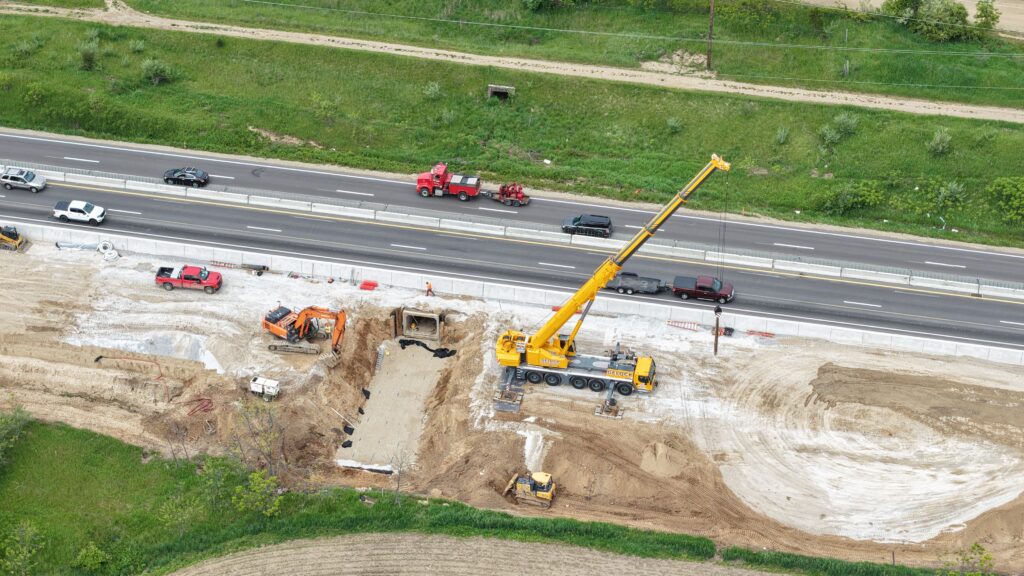
The “Box” Method: US-131 State Project
Most people imagine bridges as long steel or concrete beams. However, many “bridges” are actually engineered, rectangular concrete culverts beneath the surface.
On a recent large-scale state project along US-131, we partnered with one of the region’s premier excavating companies.
- The Mission: Install massive concrete box culverts to guide water safely beneath the highway.
- The Lift: These boxes are incredibly heavy and require a crane with high capacity and a steady hand. Because we work through the excavating companies that hold the state contracts, our role is to provide the surgical precision needed to set these “blocks” into place so the road can be rebuilt over them.
The “Beam” Method: New Bridge in Marne
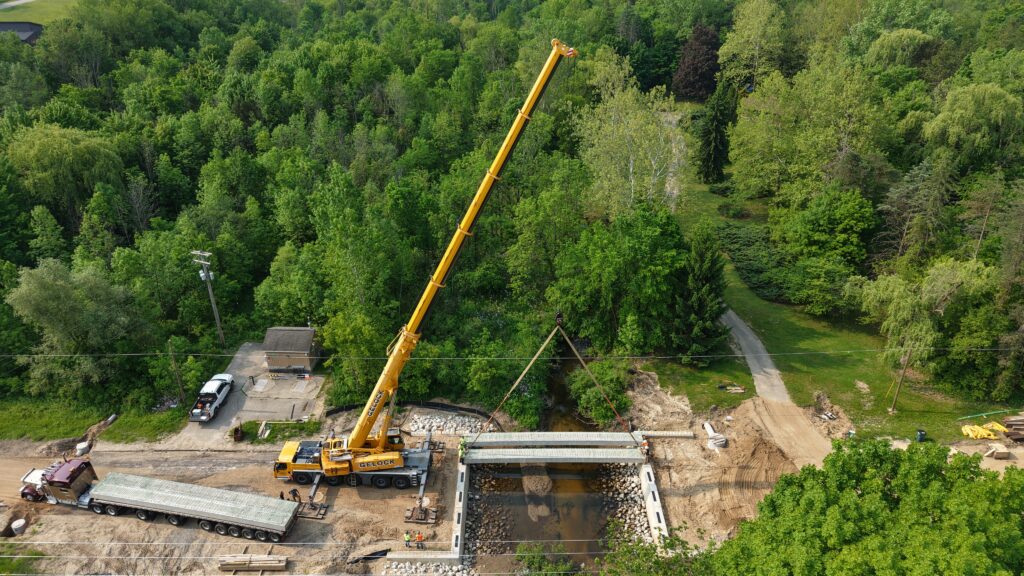
While culverts handle the water below, traditional beam bridges cross above the existing water path. We recently headed out to Marne for a county bridge project that required this approach.
- The Mission: Construct a classic beam-style bridge to replace an aging existing structure.
- The Lift: Unlike the square “boxes” of a culvert, beams are long, lean, and require perfect balance during the hoist. Working in a more rural setting like Marne often means navigating soft ground and tight access points near the water’s edge—challenges our operators handle every day.
Building Michigan’s Backbone
From state-level highway improvements on US-131 to essential county bridge replacements, Gelock is the go-to partner for the region’s premier excavating companies. We take pride in knowing that the structures we set today will be carrying Michigan families for the next 50 years.